International trade connects manufacturers, suppliers, and buyers across continents. Yet many shipping disputes and unexpected costs arise because buyers and sellers misunderstand who is responsible for what during international transport. Who pays for freight? Who handles customs clearance? When does risk transfer from the seller to the buyer?
To avoid confusion, global trade relies on a standardised system called Incoterms. These internationally recognised trade rules clearly define the responsibilities of buyers and sellers during shipping, including transportation costs, insurance obligations, customs clearance, and risk transfer.
The current version, Incoterms 2020, provides a globally accepted framework used in contracts, shipping agreements, and freight documentation. Understanding these terms is essential for businesses involved in importing or exporting goods.
In this guide, we explain Incoterms 2020, how they work, and how businesses can use them correctly when arranging international shipments.
What Are Incoterms?
Incoterms, short for International Commercial Terms, are globally recognised trade rules published by the International Chamber of Commerce (ICC).
First introduced in 1936, Incoterms were developed to create a common language for international trade by clearly defining the responsibilities of buyers and sellers during the shipment of goods.
Incoterms establish rules regarding:
- who arranges transportation
- who pays shipping costs
- who handles export and import clearance
- who provides cargo insurance
- when the risk of loss or damage transfers from seller to buyer
These rules are widely used in international sales contracts, purchase agreements, and freight documentation.
Without Incoterms, international trade transactions would often be vulnerable to misunderstandings about logistics responsibilities.
Why Incoterms Matter in Global Shipping
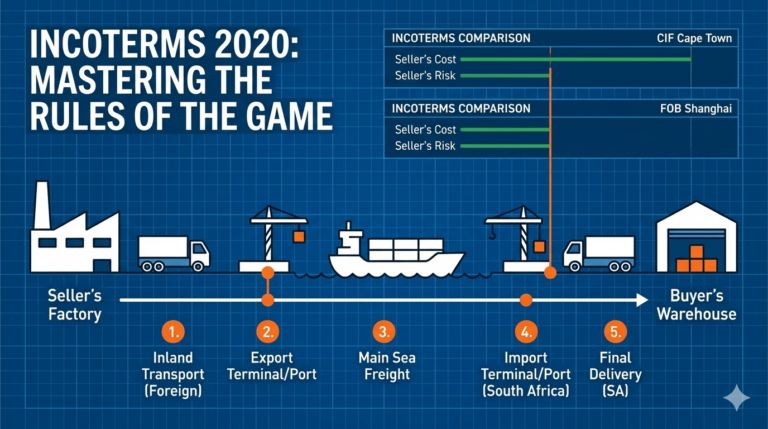
When goods move across borders, many logistics steps occur between the supplier and the final buyer.
These include:
- factory pickup
- inland transport
- export customs clearance
- international shipping
- import customs processing
- final delivery
Incoterms determine which party is responsible for each step of the logistics process.
For example:
- One Incoterm may require the buyer to arrange freight shipping.
- Another may require the seller to organise and pay for transport.
Incoterms also determine when the risk of cargo damage or loss transfers from seller to buyer.
This clarity helps prevent disputes and ensures both parties understand their obligations before goods are shipped.
Overview of Incoterms 2020
The latest version of the rules, Incoterms 2020, includes 11 trade terms divided into two categories.
Incoterms for Any Mode of Transport
These terms can be used for air freight, sea freight, road transport, rail transport, or multimodal logistics.
The seven terms in this category are:
- EXW (Ex Works)
- FCA (Free Carrier)
- CPT (Carriage Paid To)
- CIP (Carriage and Insurance Paid To)
- DAP (Delivered at Place)
- DPU (Delivered at Place Unloaded)
- DDP (Delivered Duty Paid)
Incoterms for Sea and Inland Waterway Transport
These terms are used specifically for sea freight shipments.
The four terms in this category are:
- FAS (Free Alongside Ship)
- FOB (Free on Board)
- CFR (Cost and Freight)
- CIF (Cost, Insurance and Freight)
Understanding when to use each term is essential for efficient international shipping.
Incoterms for Any Mode of Transport
EXW (Ex Works)
Under Ex Works, the seller makes goods available at their premises, typically at a factory or warehouse.
The buyer is responsible for:
- collecting the goods
- arranging transportation
- managing export and import customs
- covering all shipping costs
EXW places the maximum responsibility on the buyer.
FCA (Free Carrier)
Under Free Carrier, the seller delivers goods to a carrier chosen by the buyer.
The seller is responsible for:
- preparing goods for export
- delivering cargo to the carrier
After delivery to the carrier, responsibility transfers to the buyer.
FCA is commonly used in containerised shipping.
CPT (Carriage Paid To)
With Carriage Paid To, the seller arranges and pays for transportation to a specified destination.
However, risk transfers to the buyer once the goods are handed to the carrier, even though the seller pays the freight cost.
CIP (Carriage and Insurance Paid To)
CIP is similar to CPT, but the seller must also provide cargo insurance during transportation.
The seller pays for:
- shipping costs
- cargo insurance
Risk still transfers when the goods are delivered to the carrier.
DAP (Delivered at Place)
Under Delivered at Place, the seller is responsible for transporting goods to a specified destination.
The buyer is responsible for:
- import duties
- customs clearance
- unloading the cargo
DAP is commonly used when sellers manage most of the logistics process.
DPU (Delivered at Place Unloaded)
DPU requires the seller to deliver goods to a specified destination and unload them upon arrival.
The buyer then handles import customs procedures and duties.
This is the only Incoterm that requires the seller to unload cargo at the destination.
DDP (Delivered Duty Paid)
DDP places the maximum responsibility on the seller.
The seller must:
- arrange transportation
- pay shipping costs
- handle customs clearance
- pay import duties and taxes
- deliver goods to the buyer’s location
DDP offers the most convenience for buyers but creates greater responsibility for sellers.
Incoterms for Sea Freight
Certain Incoterms are designed specifically for ocean transport.
FAS (Free Alongside Ship)
Under Free Alongside Ship, the seller delivers goods alongside the vessel at the export port.
The buyer then takes responsibility for:
- loading cargo onto the ship
- paying freight costs
- managing shipping risk
FAS is often used for bulk cargo shipments.
FOB (Free on Board)
FOB is one of the most widely used Incoterms in global trade.
Under Free on Board, the seller loads the goods onto the vessel at the port of shipment.
Once the goods are on board, risk transfers to the buyer.
The buyer then pays for ocean freight and manages the rest of the shipping process.
CFR (Cost and Freight)
With Cost and Freight, the seller arranges and pays for ocean transportation.
However, risk transfers to the buyer once the cargo is loaded onto the vessel.
The buyer is responsible for cargo insurance.
CIF (Cost, Insurance and Freight)
CIF is similar to CFR but includes cargo insurance provided by the seller.
The seller pays for:
- ocean freight
- insurance coverage
However, risk still transfers to the buyer once the goods are loaded onto the vessel.
FOB vs CIF: A Common Shipping Comparison
Two of the most commonly used Incoterms are FOB and CIF.
The key difference involves insurance and freight responsibility.
Under FOB:
- the buyer arranges ocean freight
- the buyer purchases cargo insurance
Under CIF:
- the seller arranges ocean freight
- the seller provides cargo insurance
Businesses often choose between these two terms depending on their logistics capabilities and risk tolerance.
Common Mistakes Businesses Make With Incoterms
Despite their widespread use, Incoterms are sometimes misunderstood.
Some common mistakes include:
Confusing Cost Responsibility with Risk Transfer
In many Incoterms, the party paying for transportation is not the same party carrying the shipping risk.
Using the Wrong Incoterm for Container Shipping
Certain terms like FOB are often incorrectly used for container shipments that should use FCA instead.
Failing to Specify the Exact Location
Incoterms require a clearly defined location, such as a specific port or delivery address.
For example:
- FOB Shanghai Port
- DAP Johannesburg Warehouse
Failing to specify locations can lead to confusion during shipping.
How Freight Forwarders Help Businesses Navigate Incoterms
Freight forwarders play an important role in helping businesses correctly apply Incoterms.
Logistics professionals assist with:
- choosing the appropriate Incoterm
- coordinating transportation responsibilities
- preparing shipping documentation
- arranging cargo insurance
- ensuring compliance with customs regulations
Freight forwarders also help businesses avoid costly errors by ensuring shipping agreements align with the chosen Incoterm.
Choosing the Right Incoterm for Your Shipment
Selecting the right Incoterm depends on several factors, including:
- shipping experience of the buyer and seller
- logistics capabilities
- customs responsibilities
- cost control preferences
For example:
- experienced importers may prefer FOB so they can manage freight costs directly
- smaller buyers may choose CIF or DDP so the seller handles logistics
Working with experienced freight forwarding partners helps businesses determine which Incoterm best supports their supply chain strategy.
Final Thoughts: Why Understanding Incoterms Is Essential for Global Trade
Incoterms provide the framework that keeps international trade organised and predictable. By clearly defining responsibilities between buyers and sellers, these rules help prevent misunderstandings and ensure cargo moves smoothly through global logistics networks.
For businesses involved in importing or exporting goods, understanding Incoterms 2020 is essential for managing shipping costs, reducing risk, and maintaining efficient supply chains.
Partnering with experienced freight forwarding professionals helps businesses navigate these international trade rules with confidence, ensuring shipments are planned correctly and delivered successfully.