For businesses involved in international trade, moving goods across borders is rarely as simple as loading cargo onto a ship or aircraft. One of the most critical — and often misunderstood — steps in global logistics is customs clearance. Every shipment entering or leaving a country must comply with government regulations designed to control trade, collect taxes, and protect national economies.
When customs procedures are not handled correctly, shipments can be delayed, fined, or even seized. For importers and exporters, this can disrupt supply chains, increase costs, and damage business relationships. Understanding how customs clearance works is therefore essential for any company engaged in international shipping.
In this guide, we explain the customs clearance process, the documentation required, and how businesses can avoid delays when importing or exporting goods.
What Is Customs Clearance?
Customs clearance is the process by which goods entering or leaving a country are approved by government customs authorities. This process ensures that shipments comply with national trade regulations and that the appropriate duties and taxes are collected.
Customs authorities are responsible for monitoring cross-border trade, enforcing regulations, and preventing the movement of prohibited or restricted goods. In South Africa, for example, customs operations are administered by the South African Revenue Service (SARS).
Before cargo can enter the domestic market or leave the country, customs officials must verify that the shipment meets all legal requirements. This includes reviewing documentation, assessing duties and taxes, and sometimes inspecting the goods.
Once customs officials approve the shipment, the cargo is released for delivery to its final destination.
Why Customs Clearance Is Required
Customs clearance exists to regulate international trade and protect national interests. Governments use customs systems to monitor the movement of goods and ensure compliance with trade laws.
Several important objectives are served through customs procedures:
Revenue Collection
Import duties and taxes are a significant source of government revenue. Customs authorities collect these charges based on the value and classification of imported goods.
Trade Regulation
Certain goods may be restricted or regulated to protect public safety, environmental standards, or domestic industries.
Security and Compliance
Customs inspections help prevent illegal goods such as counterfeit products, hazardous materials, or controlled substances from entering a country.
Trade Data Collection
Governments collect data on imports and exports to monitor economic activity and develop trade policies.
Without customs clearance systems, international trade would lack the regulatory structure necessary to ensure fair and safe commerce.
The Import Customs Clearance Process
When goods arrive in a country, they must go through an import clearance procedure before they can be delivered to the buyer.
Although the exact process varies by country, the following steps typically occur.
Document Submission
Before cargo arrives at the destination port or airport, the importer or freight forwarder submits the necessary documentation to customs authorities.
These documents provide details about the shipment, including cargo description, value, origin, and destination.
Customs Declaration
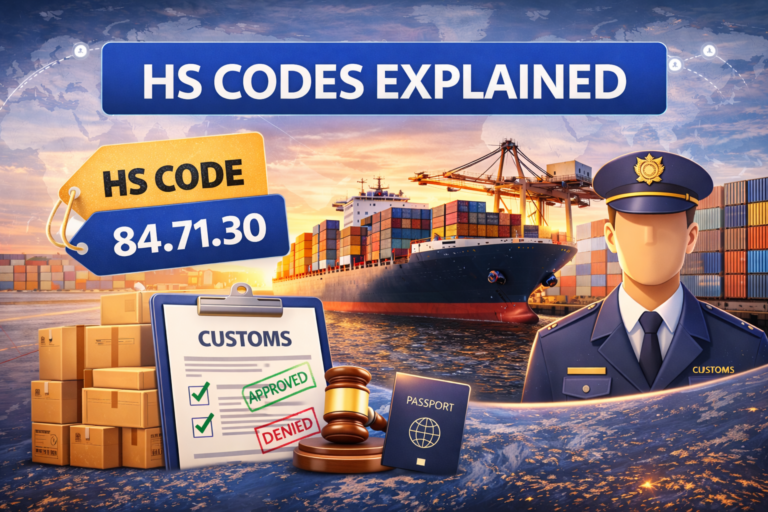
The shipment must be formally declared to customs. This declaration includes the HS code (Harmonised System code) used to classify the goods.
Proper classification ensures the correct duties and taxes are applied.
Duty and Tax Assessment
Customs officials determine the duties and taxes payable based on the value and classification of the goods.
Import duties may include:
- customs duty
- value-added tax (VAT)
- additional regulatory charges
Customs Inspection
Some shipments are selected for inspection. Customs officers may examine cargo to verify its contents and ensure it matches the documentation provided.
Inspections may involve:
- document review
- physical cargo inspection
- container scanning
Cargo Release
Once customs authorities are satisfied that the shipment complies with regulations and all duties are paid, the cargo is released for delivery.
The shipment can then be transported to the importer’s warehouse or final destination.
The Export Customs Clearance Process
Export shipments must also pass through customs procedures before leaving the exporting country.
The export clearance process typically includes the following steps.
Export Documentation Preparation
The exporter prepares the required documentation, which includes details about the goods, their destination, and their value.
Export Declaration
An export declaration is submitted to customs authorities to confirm the shipment complies with export regulations.
Regulatory Compliance Checks
Certain goods may require special permits or licenses before they can be exported.
These may include:
- controlled technologies
- hazardous materials
- restricted commodities
Customs Approval
Once the export declaration is approved, the shipment is cleared for departure and can be loaded onto the transport vessel.
Export clearance ensures that goods leaving the country comply with national trade policies and international agreements.
Key Documents Required for Customs Clearance
Customs authorities rely on documentation to verify the details of international shipments.
Several documents are commonly required during customs clearance.
Commercial Invoice
The commercial invoice provides detailed information about the goods being shipped, including their value, quantity, and description.
Customs authorities use this document to calculate duties and taxes.
Packing List
The packing list outlines how the cargo is packaged, including the number of packages, dimensions, and weight.
This helps customs officials verify the shipment contents.
Bill of Lading
The Bill of Lading is a transport document issued by the carrier that confirms receipt of the cargo and outlines the shipping terms.
Certificate of Origin
This document identifies the country where the goods were manufactured. It may affect tariff rates under trade agreements.
Import Permits
Some products require government permits before they can be imported.
Examples may include agricultural goods, chemicals, or pharmaceuticals.
Accurate documentation is critical for smooth customs clearance.
Customs Duties and Taxes Explained
Import duties and taxes are calculated based on several factors.
HS Code Classification
Every product shipped internationally must be classified using the Harmonised System (HS) code.
This standardised classification system determines the applicable duty rate.
Cargo Value
Duties are usually calculated based on the customs value of the goods, which includes the product price and sometimes shipping costs.
Country of Origin
Trade agreements between countries may reduce or eliminate duties for certain goods.
Import Regulations
Some products may be subject to additional taxes or regulatory charges.
Understanding these cost factors is essential for businesses planning international shipments.
Common Reasons for Customs Delays
Customs clearance delays can disrupt supply chains and increase logistics costs.
Several common issues may cause shipments to be held by customs authorities.
Incomplete Documentation
Missing or incorrect paperwork is one of the most frequent causes of customs delays.
Incorrect Cargo Classification
Using the wrong HS code can result in duty miscalculations and compliance issues.
Regulatory Restrictions
Some goods require special approvals before they can be imported or exported.
Cargo Inspections
Random or targeted inspections may delay shipments while authorities verify cargo contents.
Businesses can minimise these risks by ensuring accurate documentation and compliance with trade regulations.
How Freight Forwarders Help With Customs Clearance
Freight forwarders and logistics providers play a key role in helping businesses navigate customs procedures.
Their expertise includes:
- preparing customs documentation
- ensuring proper cargo classification
- coordinating customs declarations
- arranging duty and tax payments
- managing customs inspections
Freight forwarders also stay updated on regulatory changes and trade requirements, helping businesses remain compliant with international shipping regulations.
By working with experienced logistics professionals, companies can significantly reduce the risk of customs delays and shipping disruptions.
Tips for Faster Customs Clearance
Businesses can take several practical steps to ensure smoother customs processing.
Prepare Accurate Documentation
All shipping documents should be completed carefully and accurately.
Use Correct HS Codes
Proper cargo classification helps ensure the correct duties are applied and prevents compliance issues.
Work With Experienced Logistics Providers
Freight forwarders and customs brokers can help manage the entire clearance process.
Plan for Regulatory Requirements
Some goods require permits or inspections. Businesses should verify these requirements before shipping.
Proactive preparation can significantly improve the efficiency of customs clearance.
Final Thoughts: Why Understanding Customs Clearance Matters
Customs clearance is one of the most important steps in international logistics. Every shipment moving across borders must comply with government regulations designed to ensure safe and legal trade.
For businesses involved in importing or exporting goods, understanding the customs clearance process helps prevent delays, control costs, and maintain reliable supply chains.
Working with experienced freight forwarding professionals ensures that shipments are properly documented, regulatory requirements are met, and cargo moves smoothly through customs procedures.
By mastering the fundamentals of customs clearance, businesses can navigate international trade more confidently and keep their global supply chains running efficiently.