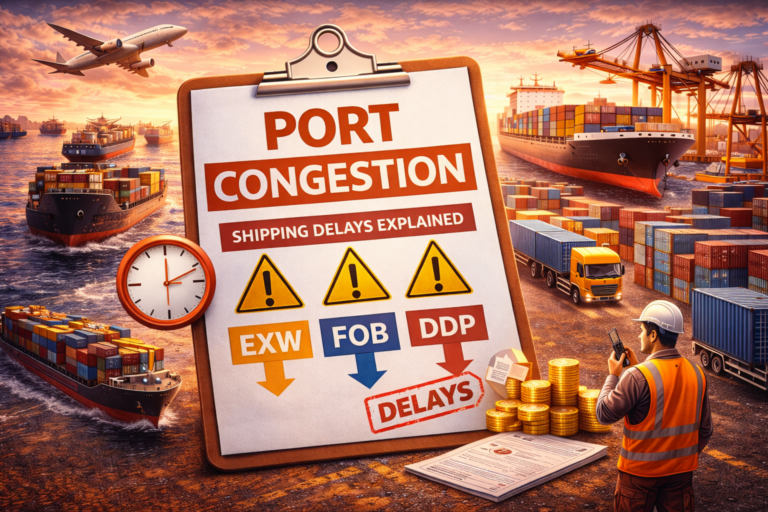
South Africa’s major container ports remain critical gateways for regional and global trade, yet ongoing delays continue to shape the cost structure of every importer, exporter, and logistics manager operating through Cape Town, Durban, and Gqeberha. These delays are often discussed in broad terms — congestion, slow turnaround, equipment failures — but the real financial impact is far more detailed and less visible.
For SMEs and larger supply-chain teams alike, understanding the hidden costs behind port inefficiencies is essential for accurate budgeting, risk planning, and maintaining competitive service levels. The following analysis breaks down the operational, financial, and strategic consequences of South Africa’s port delays and what businesses can do to mitigate them.
1. Storage, Demurrage, and Detention: The Quiet Budget Killers
When vessels berth late or containers cannot be moved quickly through terminals, charges begin accumulating long before many businesses realise it.
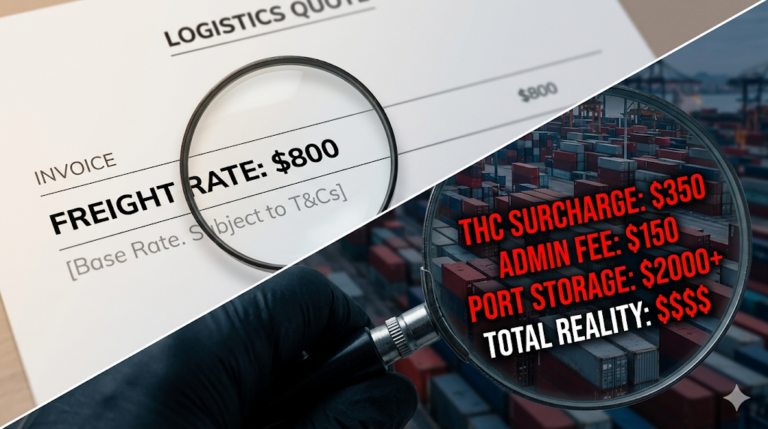
Storage fees accrue when containers sit in the port beyond free-time allowances. Demurrage applies when the container waits inside the terminal before collection. Detention begins once the container leaves the port but is held longer than allowed before empty return.
Each charge on its own may appear manageable, but when combined across a shipment cycle, they create significant unbudgeted exposure.
Cape Town’s wind-related shutdowns, Durban’s congestion, and Gqeberha’s equipment constraints often extend free-time windows beyond what SMEs can absorb. Many pay these charges without identifying the root cause or negotiating terms in advance.
2. Higher Freight Rates Driven by Port Inefficiency
Carriers increasingly price South African port calls as high-risk. When vessels face long anchorage queues, slow gantry movements, or labour interruptions, the cost of deploying a ship to local terminals rises.
This leads to several pricing effects:
Premium freight rates to compensate for expected delays.
Port congestion surcharges applied on short notice.
Reduced capacity as carriers cut rotations or prioritise more efficient ports.
Opportunistic rate spikes during peak seasons.
For businesses planning quarterly budgets, such volatility directly affects landed cost and margin predictability.
3. Longer Lead Times and Inventory Carrying Costs
Port delays translate into extended transit times, even when the vessel sails on schedule. A shipment arriving late into Durban or Cape Town may add three to ten days to the logistics timeline, depending on the queue, terminal performance, and stack delays.
This slows down the entire supply chain:
More capital tied up in inventory at sea.
Higher warehousing costs as stock must be held for longer periods.
Reduced responsiveness to demand fluctuations.
Lower cash-flow efficiency for SMEs reliant on rapid stock turnover.
In categories such as electronics, apparel, perishables, and fast-moving consumer goods, lead-time uncertainty often forces businesses to overstock as a buffer, further raising carrying costs.
4. Increased Road Haulage and Last-Mile Costs
When congestion disrupts planned pick-ups, transporters incur additional expenses that flow back to the importer or exporter.
These include:
Driver waiting time charges at terminals.
After-hours collection fees when stacks open late.
Unproductive kilometres caused by rescheduled routes.
Higher short-notice rates from hauliers during peak congestion.
Transporters operate on tight utilisation models; when a truck waits six hours at a terminal that should take one hour, the entire fleet schedule shifts, reducing availability and raising prices.
5. Missed Transshipments and Global Knock-On Effects
South African ports form part of global network schedules. When a vessel misses its next connection due to slow operations at Cape Town, Durban, or Gqeberha, containers risk missing transshipments in hubs such as Singapore, Port Klang, Jebel Ali, or Colombo.
The hidden costs of these missed connections include:
Extended voyage times by one to three weeks.
Downstream demurrage at foreign transshipment ports.
Supplier penalties for late delivery in export sectors.
Production delays for manufacturers awaiting critical components.
This effect is particularly disruptive for exporters whose goods must meet seasonal windows, such as fruit, wine, automotive components, and mining products.
6. Reduced Carrier Service Levels and Fewer Direct Calls
As operational pressure increases, some carriers reduce direct calls into congested ports or adjust rotations to minimise schedule disruption. This creates dependencies on feeder services, which introduce additional costs and variability.
Indirect services also increase:
Transshipment risks
Documentation fees
Customs exposure across multiple jurisdictions
Longer planning cycles for SMEs
For South African businesses competing in time-sensitive international markets, even a small shift from direct to feeder routes can diminish competitiveness.
7. Reputational and Contractual Impacts on Exporters
Export delays carry more than financial costs. International buyers increasingly expect predictable delivery timelines, especially in high-volume, seasonal, or temperature-controlled sectors.
When delays become systemic, exporters face:
Strained customer relationships
Lost orders to more reliable suppliers in competing regions
Lower buyer confidence during price negotiations
Additional compliance checks for time-sensitive goods
These effects erode long-term market positioning, even when the exporter is not at fault.
8. Operational Stress for SMEs Without Buffer Capacity
Larger organisations have the resources to absorb delays through diversified routing, long-term contracts, or flexible warehousing. SMEs often do not.
Port delays can force SMEs to:
Pay high spot-rate premiums
Hold excess stock to mitigate uncertainty
Operate with unpredictable cash-flow cycles
React to schedule changes with limited manpower
Unable to scale around these shocks, many smaller importers and exporters face disproportionate operational strain.
How SMEs and Supply-Chain Teams Can Reduce the Impact
While delays at South African ports may be structural, businesses can reduce their exposure with practical planning.
Use accurate lead-time forecasts, not best-case assumptions.
Negotiate extended free-time with carriers or forwarders.
Consolidate shipments to reduce per-unit exposure to fees.
Plan earlier for seasonal imports to avoid peak-congestion windows.
Use alternative ports when commercially viable.
Align Incoterms to gain more control over freight legs.
Build inventory buffers only where margin and cash flow allow.
Partner with a forwarder who proactively tracks port conditions and can reroute or re-schedule as needed.
Small changes in planning can eliminate large cost shocks downstream.
Partnering with 5 Seas Logistics
Delays at Cape Town, Durban, and Gqeberha ports carry costs far beyond the obvious. They influence freight pricing, inventory strategy, haulage efficiency, and customer commitments. At 5 Seas Logistics, we help businesses plan around these bottlenecks through accurate forecasting, route optimisation, customs management, and proactive communication. With the right support, port delays become manageable rather than disruptive, allowing SMEs and larger organisations to maintain reliability in a volatile trade environment.