For many South African SMEs, the biggest mistake in importing is not choosing the wrong product — it is miscalculating the true landed cost. A supplier quotation might look attractive, but once freight, customs, port charges, VAT, inland transport and delay risks are layered in, margins shrink quickly.
Landed cost is not just an accounting calculation. It is a strategic tool that determines pricing, cash-flow planning, competitiveness and long-term sustainability. If you misprice by even 5–10%, your entire business model becomes vulnerable.
This guide breaks down exactly how to calculate landed cost properly and how to protect margin in volatile shipping conditions.
Step 1: Understand Your Supplier Price and Incoterm
The starting point is your supplier’s quoted price — but this is rarely the full story.
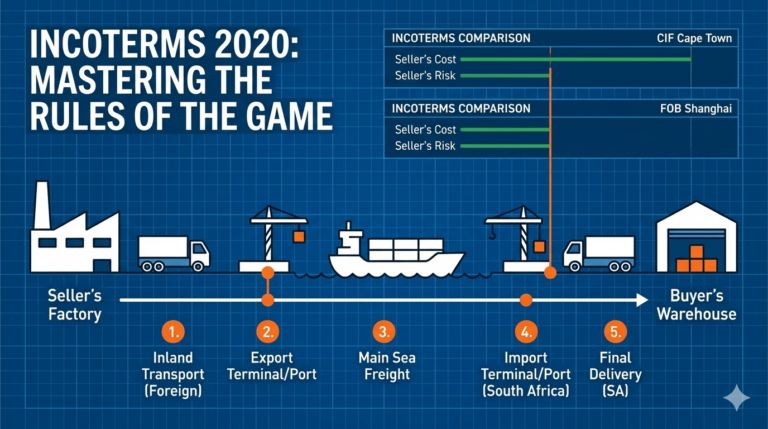
If your supplier quotes EXW (Ex Works), you are responsible for:
• Collection from factory
• Export clearance
• Origin port charges
• International freight
If the quote is FOB (Free on Board), the supplier covers export clearance and loading onto the vessel, but you still pay:
• Ocean freight
• Marine insurance
• Destination port charges
• Duties and VAT
• Inland transport
The difference between EXW and FOB can significantly alter your cost base. SMEs often underestimate origin charges when buying EXW, which inflates the final landed figure.
Step 2: Add International Freight
Freight is usually quoted per container (FCL) or per cubic metre/tonne (LCL).
Your freight cost must include:
• Base ocean rate
• Bunker adjustment factors
• Peak season surcharges
• Congestion surcharges (if applicable)
• Security fees
Air freight calculations differ and are based on chargeable weight (volumetric vs actual weight).
Freight volatility is real. Rates fluctuate seasonally and during global disruptions. Always budget conservatively rather than using the lowest market rate as your baseline.
Step 3: Include Marine Insurance
Marine insurance is relatively inexpensive compared to cargo value risk.
Insurance typically covers:
• Damage during transit
• Container loss
• General average events
Many SMEs skip this to save cost. One damaged shipment can eliminate years of margin. Insurance should be factored into landed cost from the start.
Step 4: Calculate Customs Duties
Duties are determined by:
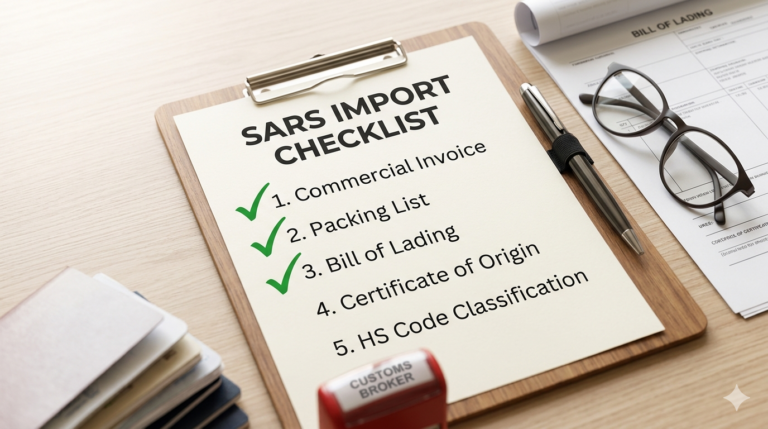
• HS code classification
• Country of origin
• Trade agreements
Incorrect classification can result in penalties or underpayment exposure during SARS audits.
Duty is calculated on the customs value, which includes:
• Cost of goods
• Freight
• Insurance
Understanding tariff codes correctly is essential. Misclassification is one of the most common cost distortions in SME imports.
Step 5: Add VAT
Import VAT in South Africa is calculated on:
Customs value + 10% uplift + duties
Although VAT is claimable for VAT-registered businesses, it affects cash flow because it must be paid upfront before reclaim.
This temporary capital lock-up must be built into your working capital planning.
Step 6: Add Destination Port Charges
Once cargo arrives, additional costs apply:
• Terminal handling charges (THC)
• Wharfage
• Documentation fees
• Clearing agent fees
Port choice affects this component. Durban may offer competitive freight rates but carries higher congestion risk. Cape Town’s wind stoppages can extend dwell time. Gqeberha may involve feeder alignment costs.
Port dynamics influence landed cost more than many SMEs realise.
Step 7: Inland Haulage
Transport from port to warehouse is often underestimated.
Costs depend on:
• Distance from port
• Fuel pricing
• Truck availability
• Waiting time at terminals
For example, Gauteng-based businesses using Cape Town instead of Durban will face significantly higher inland transport costs. Conversely, Western Cape businesses benefit from Cape Town proximity.
Haulage variability must be included, especially during peak seasons.
Step 8: Account for Demurrage and Detention Risk
Free time at port and for container return is limited.
If customs clearance is delayed or transport booking is late, costs escalate rapidly.
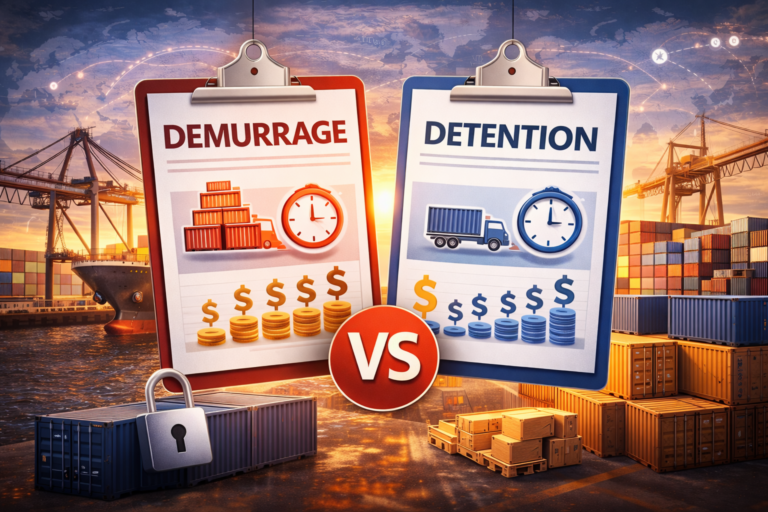
Demurrage (container in port) and detention (container outside port) can materially increase landed cost.
Even if you do not expect delays, a prudent landed-cost model includes a small contingency buffer.
Step 9: Factor in Hidden Costs Most SMEs Miss
Beyond visible charges, additional exposures include:
• FX fluctuations between order and payment
• Inventory carrying cost during extended transit
• Weather-related delays (e.g. Cape Town wind)
• Transshipment risk if cargo is routed via hubs
• Seasonal rate increases
• Carbon-related surcharges on certain routes
Working capital strain is often the largest hidden cost. If goods sit at sea or at port longer than expected, capital is tied up and unavailable for reinvestment.
Step 10: Work Through a Practical Example
Imagine a container imported from Shanghai to Durban.
Your landed-cost structure should follow this order:
- Product cost (FOB value)
- Ocean freight
- Insurance
- Customs value calculation
- Duties
- VAT
- Destination port charges
- Clearing fees
- Inland haulage
- Contingency buffer (for delays or surcharges)
Only once all ten components are added can you divide by units to determine your true per-unit landed cost.
Many SMEs stop at step three.
How Port Choice Changes Your Landed Cost
Choosing Cape Town, Durban or Gqeberha influences:
• Road freight distance
• Congestion exposure
• Transshipment risk
• Demurrage likelihood
• Inventory lead time
For example:
A Gauteng importer using Durban may reduce inland haulage but face congestion dwell risk.
A Western Cape importer using Cape Town reduces trucking cost but must account for wind stoppages.
A shipment routed via feeder services may increase transit time and holding cost.
Port strategy is therefore part of landed-cost modelling.
How SMEs Can Reduce Landed-Cost Risk
There are practical ways to strengthen control:
Negotiate Incoterms strategically rather than defaulting to supplier terms.
Consolidate shipments to reduce per-unit freight cost.
Secure extended free time during peak seasons.
Plan buffer lead times into your inventory cycle.
Monitor FX exposure between purchase order and payment.
Split high-value cargo across multiple sailings to reduce risk concentration.
Work with a forwarder who models cost before booking freight.
Proactive modelling reduces surprises.
Conclusion
True landed cost is more than freight plus product price. It is the total financial exposure from supplier door to warehouse shelf. When calculated properly, it protects margin, improves pricing accuracy and strengthens cash-flow control.
At 5 Seas Logistics, we assist SMEs with landed-cost modelling, port risk assessment, and routing optimisation to ensure that import decisions are commercially sound before cargo is even booked. In today’s volatile trade environment, clarity in cost structure is not optional — it is a competitive advantage.