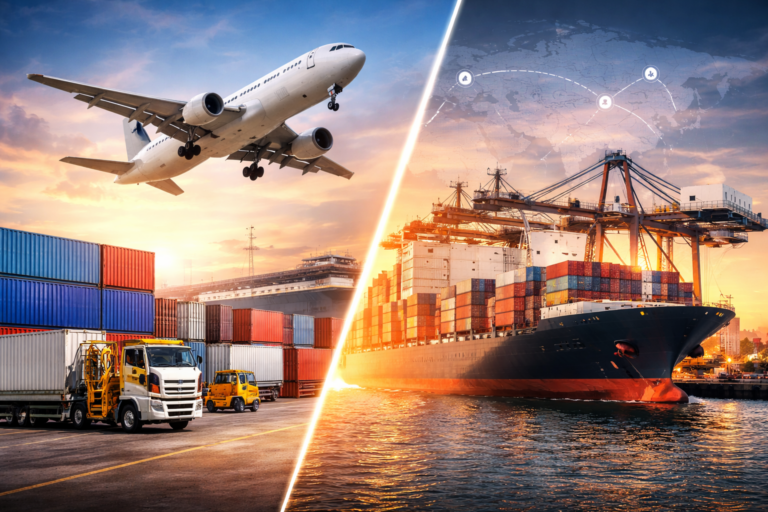
For most South African SMEs, the default choice is simple: sea freight is cheaper, therefore sea freight wins. On paper, that logic makes sense. Ocean rates are significantly lower per kilogram or per cubic metre compared to air freight.
But freight mode should not be chosen on rate alone. It should be chosen based on margin structure, inventory velocity, working capital pressure and sales risk. In many cases, what appears cheaper at booking stage becomes more expensive once delays, stockouts, and cash-flow strain are factored in.
Freight selection is not a transport decision. It is a financial strategy decision.
The Obvious Cost Difference
Sea freight offers:
• Lower per-unit transport cost
• Higher volumetric efficiency
• Suitability for heavy cargo
• Longer transit times (often 25–40 days door-to-door from Asia)
• Exposure to port congestion and stack delays
Air freight offers:
• Significantly higher per-kg cost
• Faster transit (often 5–10 days door-to-door)
• Minimal port congestion exposure
• Reduced dwell and demurrage risk
• More predictable lead times
Most SMEs focus only on the freight invoice itself. But the freight invoice is just one component of landed cost.
The Hidden Cost of Slow Transit
Sea freight extends the supply chain timeline. While cargo is in transit, capital is tied up.
Longer transit creates:
• Inventory carrying cost
• Reduced cash-flow flexibility
• Exposure to exchange-rate fluctuations
• Increased risk of demand shifts before arrival
• Stockout risk if forecasts were inaccurate
For fast-moving consumer goods, electronics, seasonal apparel or trending products, a 30-day transit window can dramatically reduce agility.
If a product sells out before the next shipment arrives, lost sales are rarely recovered. The opportunity cost often exceeds the freight savings.
Sea freight also carries additional exposure:
• Port congestion in Durban
• Wind stoppages in Cape Town
• Transshipment risk on feeder routes
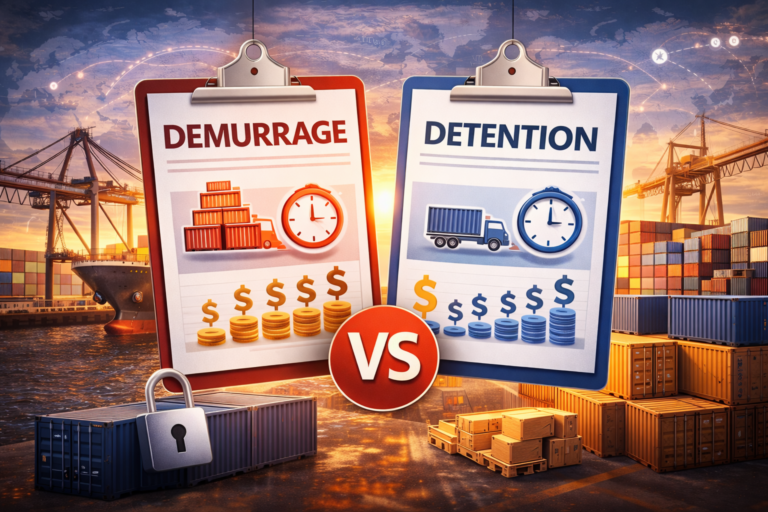
• Demurrage and detention if clearance is delayed
The longer the supply chain, the more variables can disrupt margin.
When Air Freight Makes Financial Sense
Air freight is often dismissed as “too expensive.” However, in certain scenarios, it protects profitability.
Air freight makes sense when:
You are importing high-margin products.
Your sales velocity is high.
You need urgent replenishment to prevent stockouts.
You are testing a new product line.
You are launching a seasonal product with a narrow selling window.
You are avoiding peak-season port congestion.
For example, flying a smaller batch to maintain shelf presence while the bulk shipment moves by sea can protect revenue.
If the margin per unit is strong, the increased freight cost may represent a smaller percentage of total revenue than the cost of lost sales.
When Sea Freight Is the Smarter Option
Sea freight remains ideal for:
Low-margin bulk goods
Heavy industrial cargo
Stable, predictable demand cycles
Products with long shelf life
Large-volume imports where scale reduces cost per unit
When demand is consistent and forecasting is reliable, sea freight delivers strong cost efficiency.
For commodities and construction materials, the freight differential between air and sea cannot be justified.
The Hybrid Strategy: Often the Smartest Approach
The most effective supply chains rarely rely exclusively on one mode.
A hybrid strategy might include:
Flying the first batch to secure early sales.
Shipping the bulk by sea to maintain cost efficiency.
Using air freight as buffer stock during peak demand.
Maintaining safety stock through faster replenishment cycles.
This approach balances cost control with market responsiveness.
Instead of asking “air or sea?”, SMEs should ask “what portion should move by which mode?”
Port Conditions as a Mode Decision Factor
Freight mode decisions are influenced by local port performance.
Durban congestion cycles can extend sea freight timelines beyond the original estimate.
Cape Town wind delays can disrupt vessel berthing schedules.
Transshipment routes may introduce additional uncertainty.
In periods of port instability, air freight becomes more attractive because it bypasses marine terminal risk entirely.
Air cargo moves through airports with shorter dwell cycles and minimal stack exposure.
When port risk increases, the cost gap between air and sea narrows in practical terms.
A Simple Financial Comparison Framework
Instead of comparing freight rates only, SMEs should evaluate:
- Freight cost difference
- Inventory carrying cost during transit
- Gross margin per unit
- Risk of lost sales
- Working capital cycle impact
- Probability of delay
If flying goods reduces transit by 25 days, ask:
What is the revenue generated in those 25 days?
What is the cost of stockouts?
What is the cash-flow benefit of faster turnover?
A product with strong turnover and high margin may justify air freight even at double the transport cost.
The key is modelling total financial impact, not just freight line items.
Cash Flow and the Conversion Cycle
Sea freight lengthens the cash conversion cycle:
Order placed
Payment made
Goods in transit
Arrival
Clearance
Sale
Air freight compresses this cycle significantly.
Faster stock rotation can improve liquidity and reduce reliance on credit facilities. For SMEs operating with limited capital buffers, this can be decisive.
Sometimes, paying more upfront reduces financing cost downstream.
The Strategic View
Freight mode selection should align with:
Product lifecycle
Demand volatility
Seasonality
Margin structure
Port performance trends
SMEs that treat freight as a purely transactional decision often miss these strategic layers.
Those that model freight decisions in relation to cash flow and revenue timing gain flexibility and resilience.
Conclusion
Sea freight will remain the backbone of global trade. It is cost-efficient and scalable. But air freight is not simply a premium alternative — it is a strategic tool.
When used intelligently, air freight can protect revenue, stabilise inventory, and shorten cash-flow cycles. The right choice depends on your product economics, risk tolerance and market timing.
At 5 Seas Logistics, we help clients compare scenarios before booking cargo. By modelling freight cost against inventory velocity, port conditions and margin exposure, businesses can choose the mode that maximises profitability — not just the one with the lowest rate.